THE STACK: Holden Sheppard’s YEAH THE BOYS by Garth Jones

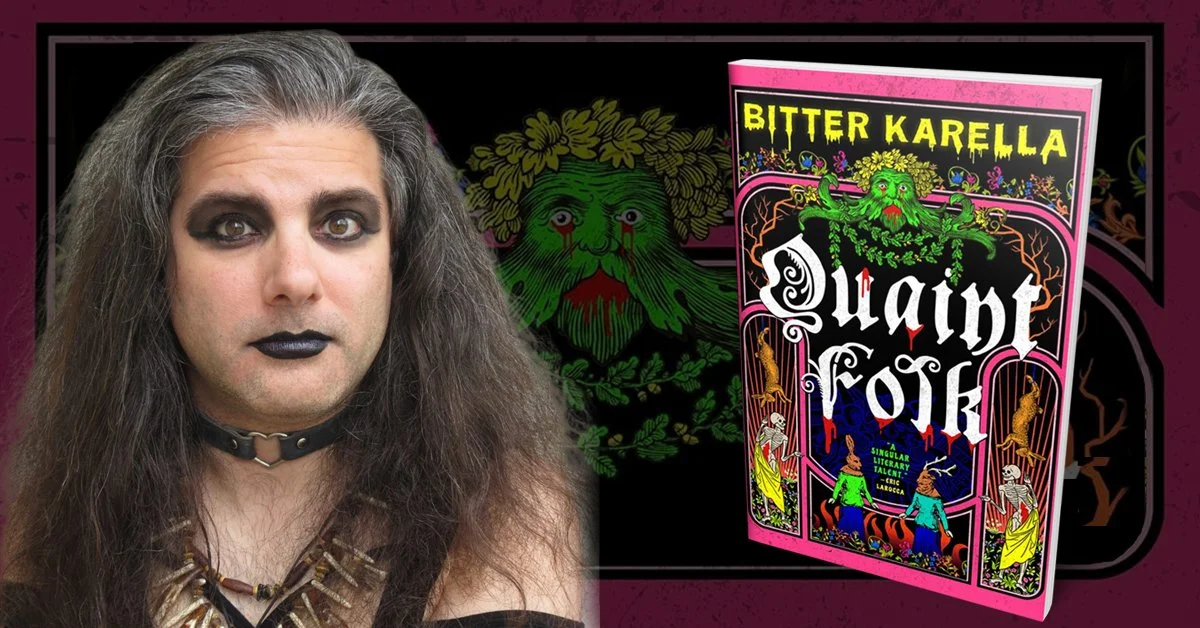
We got stuck into Holden Sheppard’s excellent new book, YEAH THE BOYS (Hardie Grant) on the latest edition of THE STACK.

We also discuss Wayne Marshall’s incredible HENRY GOES BUSH (Picador) and Tom King and Bilquis Eveley’s soon to be adapted SUPERGIRL: WOMAN OF TOMORROW (DC Comics), with some bonus writing process chat bringing up the rear (matron).

You can check out an excerpt of the pod below.

Full podcast is here.

And here’s my thirty minute chat with Holden.

Roll on Bogan Hell!

Offprint by Garth Jones

Because you can never have enough abortive blogs, I’ve fired up a new one over at the non-Nazi Substack, Offprint.
This publication will focus on writing and podcast related gear, and you can follow it with your Bluesky account.
You’ve got one of those, right?
Check it out here.

THE STACK: Brendan Colley’s ‘The Season for Flying Saucers’ (Transit Lounge) by Garth Jones

In preparation for discussing Brendan Colley’s ‘The Season for Flying Saucers’ (Transit Lounge) on THE STACK, I reached out to the author for a chat about influences, the creative process, the path to publication, missing out on Twin Peaks and the X-File the first time around and, as is probably mandatory, UFOs.

‘The Season for Flying Saucers’ author Brendan Colley,

’The Season for Flying Saucers’ has, pardon the expression, a deeply Tasmanian vibe. Are its characters indicative of, just maybe, your own neighbourhood?  Your bio says you moved to Tassie from South Africa in 2009. I can only imagine the cultural whiplash. How has the contrast between the two lived experiences informed your work?

The journey from South Africa to Tasmania wasn’t a direct route. After University I lived abroad for 11 years, splitting that time between London and Japan. I met my Australian wife (Victorian) in Osaka, where we were both teaching English. After shaking off our wanderlust, we spent 2 years in Melbourne before hopping across the Bass Strait to Tasmania.

In terms of how this has informed my writing?

For many years I set my stories in fictional places. I didn’t feel sufficiently connected to wherever I happened to be, to root my characters there. In truth, it was a lack of confidence. As a result, the settings for my work ended up being a weird mix of small American town with European sensibilities. Basically, the films that inspired me, and what I was experiencing in my travels. No wonder the feedback for my formative work was that the characters didn’t come across as being real humans. There was no sense of belonging!

It was only after I began writing The Signal Line, my first published book, that I found the confidence to set something in the location I was living. I’d been in Tasmania for five years, with a feeling I’d happened upon a place I could finally call home. The book became a homage to the town I envisaged spending the rest of my life. This has continued through to The Season for Flying Saucers, and now I expect to set all my writing here. So yes – if it reads as a Tasmanian story, I wear it as a badge of honour.

The characters, on the other hand, are expressions, reflections and explorations of my own wounds and insecurities; and idiosyncrasies that are particular to me.

The cover of the book is giving me a huge ‘Fire In The Sky’ (1993) nostalgia rush. I’m guessing you’re a nineties kid too, with all the pop cultural baggage that entails. How did that influence the genesis of the project?

Oh wow, that’s a great image! I just looked up Fire in the Sky and saw the poster art. I wasn’t aware of this film.

I was born in 1971, so in my 20s through the nineties.

My writing is heavily influenced by popular culture, though not necessarily in its time. I was at university for the first part of the nineties, and then abroad. That is to say, I pretty much lived without a television through this period. It may blow your mind to know this – and it’s a little embarrassing to admit – but I only watched Twin Peaks for the first time a couple of years ago (I’ve since watched the first season twice); and the same for The X-Files (I binge watched the first 2 seasons the winter before last). It was pretty cool to watch these works while I was in the final stretch of drafting The Season for Flying Saucers (and much to the delight of my David Lynch and X-Files devotee editor, found reason to squeeze in a Twin Peaks reference during the editorial).

It may be of interest how I specifically arrived at the idea for the novel.

In 2014 I was playing around with some narrative poetry, like I usually do as a warm-up before I start my nightly writing sessions. Out of this routine I fetched down the following:

sales rep’s text to a colleague

hi k.

hope your quarter’s tracking solidly

currently bunked overnight in launceston

flying out to melbourne sunday

business so-so, usual traumas &

resuscitations

still no ufo sightings despite

the increased mileage

quota heavy but remain optimistic

the nights are what get me through

the skies sparkle with activity

for those who are watchful

one day they will come get me

b.


At the time I thought nothing of it. These poems are for myself – not publication – and over the course of the past 12 years I’ve written over 1000 such pieces. But it’s the stitching together of two or three seemingly unrelated ideas that provides the foundation for my stories, and little did I know the voice captured in these unremarkable lines would later mature into that of the protagonist for a novel about flying saucers!

It turned out to be the first in a series of what I came to call my ‘little green man poems’. Every so often they’d pop up and ask to be written, and over the next decade I collected around 80 in this style. I had no plans for them, but simply enjoyed that they humoured me.

Fast forward to the COVID year: during this period I became interested in exploring the idea of a family confined to a house. Perhaps due to an economic downturn? I spent an evening with it, penning down a few notes about an estranged family with two adult children forced to live under the same roof for a fixed period of time. These family members had no interest in resolving their differences; it was a purely practical arrangement. Once they’d sorted out their respective circumstances, they would continue on their separate ways. I filed it away, thinking it fodder for a play (I don’t write plays!), and something I’d likely never revisit.

Later that same year I came across an article about how summer is the season where UFO sightings are most commonly reported in Japan. From this article a title leapt out at me! The Season for Flying Saucers. I immediately knew I wanted to write a book with this headline. In that same sitting I connected the title with the two aforementioned ideas, resulting in the following premise:

Due to an economic downturn, an estranged family is forced to live together under the same roof for one summer. As if things aren’t strained enough, they become increasingly convinced they’ve been targeted for alien abduction.

The main protagonist would be the 29-year-old son. Unbeknownst to the rest of the family, in his despair and belief that he’s not meant to know happiness in this lifetime, he’s been writing alien abduction poems on an old typewriter, requesting any passing motherships to drop down a beam and whisk him away.

With a title, a premise, and the voice for a protagonist, I had the reasons needed to abandon my then work-in-progress and embark on a journey to discover this family and their story.

The published novel is the product of the roads travelled down (and skies traversed!) over the next three years.

Regarding the cover, Barry is great, and when the time comes for cover art he asks if there’s anything you’d like to throw into the design mix. This isn’t for specific ideas, but more inspirations related to the theme and essence etc. that would be worth knowing (Josh Durham from Design by Committee designed the cover for both my novels).

For The Season for Flying Saucers, my contribution was this: ‘1970s flying saucers poster’

I included a link to the image page on Google that results from searching this term.

(1970s because the inciting UFO incident in the novel is the one reported in Maydena, Tasmania in 1976. But if you replace 1970s with 1980s or 1990s, you effectively get the same style of image)

From there, Josh weaved his magic.

Interesting note: apparently it’s a design rule that you can’t include an image of anything stated in the title. In other words, The Season for Flying Saucers couldn’t have a flying saucer in the cover. Luckily for me Josh knows best, and I couldn’t have wished for a better image to reflect the book.

You inhabit an almost Lynchian space between the mundane and the surreal (sans the bloodshed). Are there any authors, Aussie or otherwise, who inspire you and similarly fit into that zone?

This took me a long time to figure out, and I don’t think it was inspired by other writers/books.

I’ve been writing routinely for 2-3 hours every day since my early 20s; and it was 26 years before I published anything (this being The Signal Line, with Transit Lounge in 2022). Before that, I’d spent 3.5 years on my first effort at a novel (never finished), and 6.5 years on my second effort (finished, but roundly rejected). The second half of the 90s and the 00s was devoted to other forms: 4 screenplays, 2 plays, a radio play, some short fiction, a libretto, 100+ song lyrics, a book-length collection short stories ... basically everything and anything, trying to find my voice.

With my first two novel attempts, the obstacle seemed to be that the surreal elements overshadowed the characters, to the extent they never felt ‘real’. They were props, caricatures, lacking in resonance. So concentrated was I on pushing the concept – my ideas always sounded ‘cool’ as a pitch – that my characters didn’t come across as Tarantino-esque cool, they seemed cartoonish. There was heart in there somewhere, but I didn’t know how to bring it out. My education may have benefitted had I actually watched Twin Peaks and The X-Files when it was running!

At the same time, my life had taken a path I hadn’t allowed into the creative process. When I wrote, I visited my imagination without facing my shadows.

Every artist has their ‘thing’ they keep coming back to. You can’t escape the wounds that inform your work – even subconsciously – if you’re writing honestly.

For me, it’s family & home.

I don’t set out to write stories about family ... but usually, as I venture deeper into a work, I look up and go, ‘Oh, it’s that again!’

I suppose my sort of nomadic existence – including my parents going through a prolonged trial separation and then divorce between the ages of 3-5 – is the thing that sits within me, and which wasn’t reflected in my work in those formative years. I’d lived in 14 different accommodations (houses/town houses/units etc) by the time I left South Africa. 7 places before I finished primary school, and 7 places through high school and university. So the family home is an elusive thing to me. Then I lived on the road for 11 years. Consequently, my work tends to be about people who are leaving home, returning home, trying to keep a home, trying to sell a home, trying to make a new place a home, trying to furnish a home, trying to clean up a home. This theme doesn’t excite me when I list it out like that, but the house, the neighbourhood street, tends to be the stage on which my characters wish to play out their lives. Chasing that sense of belonging: running from it, or trying to find their way back to it.

When I realised this (not an epiphany, just by attrition), my voice sort of crystallised, and that space you speak of between the mundane and surreal gave my characters the heartbeat I’d been searching for. Somehow, by leading with the mundane – that kitchen-sink drama – and positioning the anomalous at the periphery, sort of peeking-in, I could make it work, for the kind of stories I was trying to tell.

Perhaps if I’d studied creative writing I’d have learned this and saved myself a couple of decades. But truthfully, I needed to write my way to this understanding, and have those lived experiences, to recognise it.

As for books ... that’s tough, as there isn’t one writer who inspires my overall style or tone. But there are many who inspire different aspects.

Here are a few.

Willy Vlautin. I discovered him about six years ago, and ploughed through all his work over the course of 18 months. Talk about mundane! The way he’ll write a character pulling up in their driveway, getting out the car, walking to the door, fumbling with the key, opening the door, going into the kitchen, depositing a bag of groceries on the kitchen table, opening the fridge, taking out a can of beer, opening the beer, taking a swallow. I mean, that space which for most writers is an action beat to connect the main action, for him is the work, is the heartbeat. His writing affects me deeply. Every sentence simple, accessible, and without style ... and yet a voice that is all style. This is something I’ve thought about a lot, the simple way of telling and showing a story, where the style isn’t in the swing of the sentence, but in the voice. Willy Vlautin sits at the top of the mountain for this.

Patrick de Witt. For his humour, and wit. I wish for my writing to have a warmth, joy, sadness, disappointment, quirkiness. Patrick de Witt’s books are these things to me. His sentences are the kind I read more than once.

The surprising one – not an inspiration – but unexpected, for sure. A couple of years ago my wife gave me a book for Jolabokaflod (have you heard of this tradition?). The book: Beautiful Star, by Yukio Mishima.

She gifted me this novel because I was writing The Season for Flying Saucers. Oh my, when I read the opening pages! A family of four who each hail from another planet, here living on earth, in a house. Just the matter-of-fact way this was declared to the reader, a conventional family going about their business in an every day manner, one from Mars, one from Venus, one from Mercury, and one from Jupiter. It was this matter-of-factness, where the line of reality is moved a few degrees, so the other-worldly is part of reality, but not in a significant way, because normality still reigns, that moved me tremendously. I wish I’d discovered this book a decade ago (not for the crazy stuff Mishima goes on about), but for how he writes that space between the mundane and the surreal.

How did you end up with Transit Lounge?

Serendipity, luck, fate, the stars? Something or someone was looking out for me, so that my first two books found a home with Transit Lounge. And it wasn’t a straight-line journey.

I’d finished the manuscript for The Signal Line, and started querying in earnest. I did it in the right order: agents; then publishing houses. For the first time, I was getting bites.

Unlike the U.S, where the only avenue to publication is via representation (and you can spend 2 years querying 80 agents, which I’d experienced with my previous manuscript), the pool in Australia is small. Additionally, Australian agents don’t tend to represent debut authors. Still, if you’re going to try, it’s agents first, and then publishing houses.

I submitted to 6 agents in total. Four of those agents requested a partial (3 chapters/50 pages); of those four, two requested a full (whole manuscript); of those two, one read the whole manuscript. That agent was Martin Shaw. Ultimately, however, he passed on it. But he was awesome, providing personalised feedback and encouragement. I made the decision if I ever found a home for the manuscript, or when I finished the next one, I would go back to him.

So I proceeded to query publishing houses. Affirm Press first (no response), and Text. Text requested the full manuscript. They sat on it for 18 months. I was restrained, only nudging them every six months or so. They kept me on the hook, but as time passed I knew the odds were falling out of my favour. In the meantime, the manuscript won the Unpublished Manuscript prize in the Tasmanian Premier’s Literary Awards. This peaked Text’s interest once more, but finally they gave me a ‘No’.

Martin – still not my agent – was cheering for me from the sidelines. We’d developed a connection through Twitter, and had begun sharing war stories: my experience at Text, and his own experiences with his writers at Text. He was extremely helpful, giving me insights on how it worked, who was likely reading it, how they might arrive at their decision, timeframes etc. By this point I had lost heart, believing the novel would never find a home (I’d submitted to all the other publishing houses in the interim). I was deep into the next novel, eager to clear the energy of this manuscript that seemingly didn’t want to die. It was Martin who suggested I submit to Transit Lounge. I still remember his words: ‘You never know what Barry will like.’

In January 2021 I submitted to Transit. Their submission page said they were closed to queries. I submitted anyway. I’d been checking their website for six months, ever since Martin’s advice. But I’d reached the end of my tether, and shot it through. Barry responded the same day, saying he looked forward to reading it, and would get back to me within seven weeks. Five weeks later he offered me a contract. That same day, before I responded to Barry, I reached back to Martin to share the news, and asked if he would consider representing me. That is how I ended up at Transit Lounge, and also with Martin as my agent.

Later, Barry told me his submission page was always closed to queries (I don’t know if this still holds true).

Hack question. Have you ever had a UFO encounter? (And now that all the conspiracy theories are turning out to be true, how long until we see a televised interview with a grey?)

I haven’t had a UFO encounter. I don’t know if I wish to have one!

I can tell you my wife is relieved the novel is finished. My alien abduction poems made her uncomfortable. She was concerned they’d hear me, and one day respond to those requests (much like Noah’s ex-wife in the novel!). So we’re a bit like Noah and Sarah in that way, where the idea of it scares me, and I have a trepidation, but I can’t help writing those pleas; and she doesn’t believe in aliens, but would rather I didn’t address analogue poem letters to them, just in case.

You can buy the book from Transit Lounge directly here. You can find Brendan on Instagram here.

THE STACK: Stayin’ Alive in Channel Country by Garth Jones

In preparation for discussing Stayin’ Alive in Channel Country on THE STACK, I reached out to author James Podhorodecki for what was supposed to be a brief chat. Herein lies a less than brief, albeit fascinating foray into the author and photographer Kial Menadue’s creative processes.

You and Kial’s dynamic is classic. What forged your creative partnership?

Kial and I went to high school together. But it wasn’t until filming a video clip in his ex-ex girlfriend’s grandmother’s house for my old Band Dirty F, that we realised our creative connection. The song On Your Own made us a feel a similar way, though we dared not try to decipher its absolute meaning. Where it came from was obvious to me – heartbreak. But there was some energetic force in the house that made us feel something else. We stayed the night there and drank bottles of wine around the indoor fireplace in the centre of the loungeroom and could feel, and on occasion hear the house wanting us out. That song brought an unwanted energy of pain and loss to the house that was not invitational, though the grandmother was fine with us being there herself, I’m not so sure her passed husband felt the same. I think the darkness we felt together that we couldn’t word, lured Kial into certain frames and shots he was filming that echoed the haunted feeling that heartbreak leaves, strangely enough in a house that felt as though it was simultaneously haunted by the dead at the same time as being haunted by us. Probably more so us to be honest. We united in this feeling, the bond was formed creatively from a spiritual level.

When I moved to Daylesford for a year after being laid off from a racket ATM installation job and going through yet another break up, I had to write a book. That was the thing. Go there for a year. Find something worthy of a book. Find my style of writing. Be me. Find me. I sorta already knew anyway because everything I’d written at Uni was real. I just didn’t see the point in making shit up when my life was so rich with drama, drugs, sex, music, sorrow etc. I tried to do a story on drug dealing in Melbourne, I’d chaperon my friend round his deals, but when the Uni realised I was being serious they quickly flagged it, so it never got written. It would have been terribly immature anyway really. Where were we? Yeah… so, as I got to know people and places and stories around the small town, I felt this pull to reach out to Kial and ask him if he would be interested in coming up to photograph some stuff. I think by then he had already done Botany in Colour, a photo-book on his time living in Botany in Sydney with his ex-ex partner (saw her at a café yesterday weirdly enough. Ignored her. She the same). Anyway, the more I filled him in, the more drawn he was. He came up for weekends, then half weeks, then we were basically living together, everyday was this book. This novel and photobook. Every conversation was this wild obsession of adventure and chaos, debauchery and women. Psilocybin mushrooms grew from the earth just by the house. We were tripping all the time and going from here to there, capturing our vision of the stories we were living, involving ourselves with so much of the town. It was a pretty insane time for us. It felt like somehow we ended up knowing nearly everyone in such a short time.

This was the true forging of our creative partnership. There in Daylesford. We were so in sync we knew exactly what the other was thinking and feeling at any given moment. The book is still being worked on, in the back of our minds. It’s one that we’ve both felt has required significant reflection and growth within ourselves. It would have rolled out as some free-flowing childish manifesto if I’d gone ahead with it as I was then - trying to write it as we lived it, just like Channel Country, just writing about writing it at times. So, I have every day’s doings hand-written in journals over that year or so. And two different files of book 1 of 2 or 3 somewhere. But I recall everything… at least... I hope I still do. I reckon a read of the notes and I’ll be right back there, smelling the pine and tasting the freshly picked midnight mushrooms growing under the moonlight covered in kangaroo shit and rain. And all the significant conversations and insignificant ones are all written down anyway. It felt very Kerouacean of us, even though we were in just one spot. And by then, I already knew my style was this gonzo thing, as I said. The freedom to write the truth of an experience, but the courage to lean into the charge of your own perspective with heightened sensitivity as well as emotional and psychological vulnerability. That’s what we sorta rounded out together. Both in the expression of photography as well as prose.

We later wrote and recorded an album in that house, and a few E.Ps under Amateur Songs for Friends and lovers. The Comedown off our first E.P recorded up there is the track you hear on our insta ads. We did an album called How To Start A Cult, under Friends and Lovers. That album is really about the same house too, and the cultish feeling we shared up there with a bunch of close friends and lovers.

So, our relationship crosses many levels and dips in and out of many creative tactics and mediums of expression, all before we (well Kial) made the snap decision we should go to this fuckin’ camel race in Channel Country.

This is in the grand tradition of HST’s scabrous odysseys - thinking The Kentucky Derby is Decadent and Depraved. What’s the split between gonzo embroidery and legit reporting?

I suppose I glossed over that in the previous answer. You can tell, I’m a take it as it comes person, not too bothered with reading ahead, and actually… I think that may have something to do with the question. Kial and I, we figure we are artists, as pompous and fuckin’ whatever people may think when folks say that, but although this is our shit, this style, we have so many other modes of expression. Legit reporting... man… I just don’t see human nature in it. There’s no soul. Facts are fine. We need facts. We need to know what is happening in the world so we can change it. Fine. Journalism is its own necessity for our material landscape. Go ahead. But I want to feel and I want to transcend an inner part of the self. I wanna know what the person is drinking when they’re writing something - that gives me something different ya know? I want to sense freedom in it. I want that person’s smell on me. I want to hear their footsteps, I want to know how the world looks - to them, not how it allegedly ‘is’. I want individuality that blows the shit out of solipsism, to write with the same authenticity of feeling as the greats that have come before us, and the greats we’re lucky enough to still have. I want to connect deeply in visions, in words, in poetry. And why not sustain the truth as you do it? That’s also what sets us apart from HST, we didn’t bend anything at all. Not one piece of dialogue. There’re elements of paraphrasing, there must be. But my notes were always being taken. There was writing about taking notes as notes were being taken (I’ve had an acid loop doing that once actually and I couldn’t catch up to myself obviously. Trying to write about writing the thing you are writing right then as you’re writing it.). And in that state of mind (not the acid one), you just remember everything. You just recall all of it with so much clarity, it’s like something else is in control. I’m out here to see if the meaning I’m creating for myself, through writing, can actually keep me alive. The existential element runs right through both of us and leaves the pages in the dust. Doesn’t matter how much you drink when it’s your existential purpose on the line. Then, if you’re lucky like I am, blessed even, you’ve got that second mind there too, to help fill in any gaps, or validate your own, correct you and help you. But that split, between legit reporting and gonzo-esc, it’s art. It’s gotta be art that elevates us (humanity). We are more than what our societies are built from. It’s gotta be art, it’s your art, which means it’s you. Be as authentic as possible in it. This tradition offers that even if HST bent the truth, well go ahead too, it’s a feeling of expression of an actual encounter. I have no issues with anybody’s method, but this is ours it seems.

I also read this wonderful quote recently that seems fitting, by Spanish poet Eugenio D’ors - “what doesn’t grow out of tradition, is plagiarism.” Taken from The Earthly Delights chapter in Luis Bunuel’s My last Breath (pg69-70, 1985)

It’s stuck with me. Fucking good read too.

Another clear reference was Wake In Fright. why doe the “city boy consumed by the savagery of the bush” trope resonate with you?

I actually didn’t put that together till a few months after writing the book. Kial asked me if I’d seen the film on the final page of chapter 5 Plastic Chair Republic, and I hadn’t. I didn’t watch it until after writing the thing and it was beyond uncanny. I actually only found out a few days ago it was even a book, and a customer at the liquor store swiftly gave me a copy. But, yeah, was fucked man. So, it just is what it is, I guess. Spose it’s just a peculiar truth to the outback. I’ll leave the ‘why it is’ for the legit reporters, and the ‘how it is’ to the artists. We would have preferred a Min Min experience, but we got what we got. Least we got a few shooting stars in there. That part actually was hard to write because it seemed so damn cheesy, but it happened. It was real. I couldn’t leave something out that was handed to us like that, I’d be betraying the universe.

James and Kial, back of beyond.

Kial’s photography, I’m going to say it, is giving me some latter day Rennie Ellis vibes. What’s his process in potentially hostile territory like the camel races?

What is the process? 

Kial: When James and I lived together in Daylesford (the town where I still live) - we did a pretty significant piece on the local speedway club - “speedway 3460.” It was published in Smith Journal at the time.

I loved it down there. We both did. Some real Crusty Demon types. And I think that’s probably where we really learnt how to hang out and work with all sorts of people, especially the unpredictable, violent types. I’ve never really felt intimidated by these sorts of people, in fact I quite like em. We shot there for an entire year, so we had so had plenty of time to build relationships and let things happen. 

The camel race was quite a different beast. Every day felt like a last opportunity. 

Whatever the social or psychological subtleties are, at some point I guess they just become embodied. But I do think these “skills” are just as important as any other aspect of the “craft.” 

If you can’t hang, if you can’t get yourself into situations with people, I just don’t see how you can get out deep enough into the water. (out where the Murray cods are not only of legal but impressive size.) pls delete this. 

What did I learn in regards to process from this trip in particular? 

Directness works.

“Let me take your photo” - that works 

Let it be a compliment 

Trying to justify it with any sort of intellect, just makes it weird real quick. 

Over think it and you’ll miss an opportunity. 

I feel like I’m giving advice now, so I’ll stop. 

Our Experience: 

One thing that I think is important to point out, is that we didn’t go into the experience with any expectations. 

I’m sure I would have much preferred a few laughs and a good night’s sleep. Maybe a transcendental Min Min light experience? Something spiritual? I dunno. But as is the way with these things, you get what you get, and you don’t get upset. We responded to how we felt, and the aggression and the violence was there, so we had no other real choice other than to respond to it. 

Our presence obviously caused a friction. There was a spark. And despite the overwhelming, looming sense of failure in the air, I was convinced something was about to happen. Even if that meant goin’ up in flames. 

So, the decision to mirror that back. To shoot with intensity, flash on, get in people’s faces, it all just happened. It grew out of the mindset that we were in.

I wouldn’t have gone out of my way to be confrontational - the thought makes me uncomfortable. It’s just not in my normal temperament. But faced with the particular set of circumstances we were in, it became instinctual. Were we responding to something we brought with us as well? Who’s to say. 

Editing:

Just one more thing, something that changed about my process during this trip in particular. 

I’ve always associated subtlety with intelligence. But there certainly ain’t anything subtle about these photos.  

When I got around to the editing process, well firstly I was already sick to death of the way I’d been doing things, the way I’d be editing photos for years. Spending hours on each one. 

The red. It’s obvious, but it works.  But the reason it works is because it’s emotionally true to our experience. Once I took the blues out of the sky, it landed everything in a strange place, kind of a waking nightmare, stuck between day and night. 

And once I discovered this place, the selection and editing process became fluent and intuitive. After months without movement, everything was finished in a couple of days. 

In reflection, maybe something I was trying to do with the photos, intentional or not, was capture the spirit and intensity of the last night of the book. The only time I didn’t have my camera with me and James didn’t have his notebook. If that is the case, it might explain the abstraction and the surrealism in the imagery - attempting to reveal whatever it is that’s hiding in the shadows that channel country casts on itself. 

Like all good writers, you’re manifesting an admirable streak of imposter syndrome. Drinking was my gateway to creative self-confidence for a long time. Any other tools in the kit? Otrjust sticking with the classics?

In the past, to find something worth writing about, you name it man. But to do the labour part of writing the book, it’s just red wine until I can’t see anymore. Or I know I’m fumbling, and the flow is jutting and clanky. First three days after getting back from Channel Country, I was at the laptop three days straight 10am-ish to 10pm-midnightish, getting it all down as my housemate Chris Rigney (also from Friends and Lovers) painted all day in the same room… I think the windows were open? I finished 80% of the book in that time drinking three bottles of red a day. The last 20% came a few months later broken up by a few more months after that when I had the time to re-enter the chaos of that head space. When I write, I have to be in flow state. I need no interruptions and as much red as I want, and the whole day and night clear. Beer doesn’t work when I write long-form. I drink it too quickly and it’s distracting opening bottle after bottle, can after can. Spirits are not an option unless its poetry, but any state of mind works for poetry, that’s something I love about it. Then editing came months after that. So, the imposter thing, I mean, I dunno, I have felt it at times, like then and there when we were living it, and when I was writing it. But in time I’ve overcome it, the existential element drags it away from HST, so does the vulnerability. And though the excess involved in Stayin’ Alive in Channel Country was just Oxazepams, Ritalin and booze for us, it’s whatever it takes to get the story really. But one thing I’m wary of now, after this debut, is to not let the story write you. There’s power in authorship. That goes for the existential element too. Set some boundaries and maybe say ‘no’ to shit sometimes. Maybe a few times of ’going over the edge’ as HST says, is actually enough to set your compass straight. But by God, you’ve definitely gotta go over the edge, and as many times as it takes to get the compass working. Apart from that, I look to Maha Kali, and I get whatever it is I need from that.

I had some extreme anxiety over your booze supplies and actual finances throughout the narrative. A heroic deployment of the Jobseeker allowance. That’s more a statement than a query.

Statement preferred. I will say though, most of it was on Kial’s credit card.

What’s next?

The dream is to go to Svalbard. The most northern town in the world. Spend a month and a half in light, then a month and a half in darkness. That’s the big fella. That’s the big dog of a story, which financially at the moment is impossible. But we have faith we’ll get him. It’s not time to finish the Daylesford book yet. We’ll both know when that time is. Maybe there’s something in between, our mate in Darwin, after reading the book, asked us to come up and shoot camels with him. What a strange sorta sequel that would be. Not sure how I feel about doubling down on the desert thing though. I’d like something fresher, I think. We’ll follow our intuition... and our cash too. The focus now is mainly getting this thing out there on our own pennies. I’ll likely put together a poetry book of my Instagram posts from @wordsofsloan, print it, and delete all that history – fuck it all off. Print or nada type deal. But other than that. I’m staying in the present.

Did you always intend to self-publish? How’s that process working for you?

I certainly didn’t. I had no idea what I was doing. I must’ve sent out emails to every publisher big and small in Aus or so I tried. Then after a year or so, I sent emails the US and UK. This was before LLMs were doing their thing, so the process was fucking exhausting. Hundreds of these pitches in so many different forms for well over a year, maybe two years probably. And no bites. Silence or kind hearted rejections, “very funny and well written, but not right for our audience sorry, wish you all the best” type of shit. Eventually I tried using Tablo, some company in Richmond, Melbourne, who print you a pretty shotty and pathetic looking copy. I knew I wanted to stay away from Amazon and all that grotesque oligarchical bullshit if I could help it. Tablo ended up being a shame with no staff, just some young dude who got a few millions young then started up this bullshit manuscript-to-print system, distro service thing. A few years ago, they were legit for a time, but something must’ve happened and they shat the bed. They sent out the books I when I ordered them, but there were issues with the blurb and a few things. So, tried getting in touch and couldn’t. I even drove to where their office allegedly was. It was empty. So, I think I must’ve sent out even more hopeful pitches to publishers after that for a while, until exhausted, and just needing this to finally come to an end, I opted for printing 100 and seeing how they went. Chris Rigney from Friends and Lovers did all the typesetting and cover tech that required an InDesign genius. Dunno what I’d do without him. They all sold pretty quick, in a few weeks before and after two book launches I organised. The first in Daylesford at Back Bar, which is still around and thriving. Best place for a drink in Daylesford. And then Eydie’s Bar on Lygon.

The original insta ad had nothing on the one Kial has now done for us. Then I printed another 90 and they ended up selling in 8 different countries, in a matter of weeks too. But I was overseas doing this from Sri Lanka – hence the Columbo Sunday paper interview - that worked out through a friend of a friend. I ran out of money over there, came back with nothing. So, the books have only been up for sale again since November 2025. I didn’t ever plan to self-publish, but now I use Ingram, so I can get em into Dymocks as well as all the independents that have been stocking them whenever I’ve had copies – bless em. Initially I was getting them printed from a place down the road on Lygon street (Implant Media), coming back after spending 2k or whatever on them, thereabouts (all my money), then driving to book stores all around Victoria in my girlfriends car individually going in to speak to managers one on one to get them stocked. It worked, but fucking hell. This isn’t 1975. Why am I torturing myself like this? So, yeah, now I do it through Ingram and they can be sent off to anyone, anywhere. It’s been an arduous and exhausting process. Teaching myself Meta ads, marketing garbage, Canva shit, website building, etc. All the stuff that as a writer, you definitely don’t want to be doing. But I think now, Kial and I both feel like this is the best tactic. The path we’re on seems to be gaining momentum. I sold 38 in the last 7 days. I had to recheck the numbers to make sure… I’m gobsmacked. Let’s hope it isn’t just an anomaly. And we’re thankful that we get to own absolutely everything involved now too without some stem cell slurping lecherous corporate giant squeezing our nutsacks. Novel is ours, photos are ours, music is ours – it’s all ours, and that feels grounding. Would I recommend self-publishing? Well… if you’re able to be your own marketing slimebag, sure. If you’ve got the capital, sure. If your work is authentic and you refuse to give up on it, sure. Do those things often swim together harmoniously? In my case no. I’ll let discernment do the speaking for everyone else.

Buy the book here.

THE STACK by Garth Jones

Got an ARC of your 2026 book release up for grabs?

I’m dead keen to have a look, then, ‘cause this year on the The Justin Hamilton Podcast we’re introducing my new, regular segment THE STACK, in which we’ll be talking all things books, graphic novels, and any other printed artefact that’s non AI-generated.

Hit me up in the DMs if you’ve got a publication you think we should feature - we’re chomping at the bit to get stuck into deep dive lit discussions -high, low or any brow in between - in the months to come!

Other contributors to the podcast include Wil Anderson (ABCTV’s Gruen), popular American comedian Dave Anthony (The Dollop) and TV Blackbox founder Steve Molk.