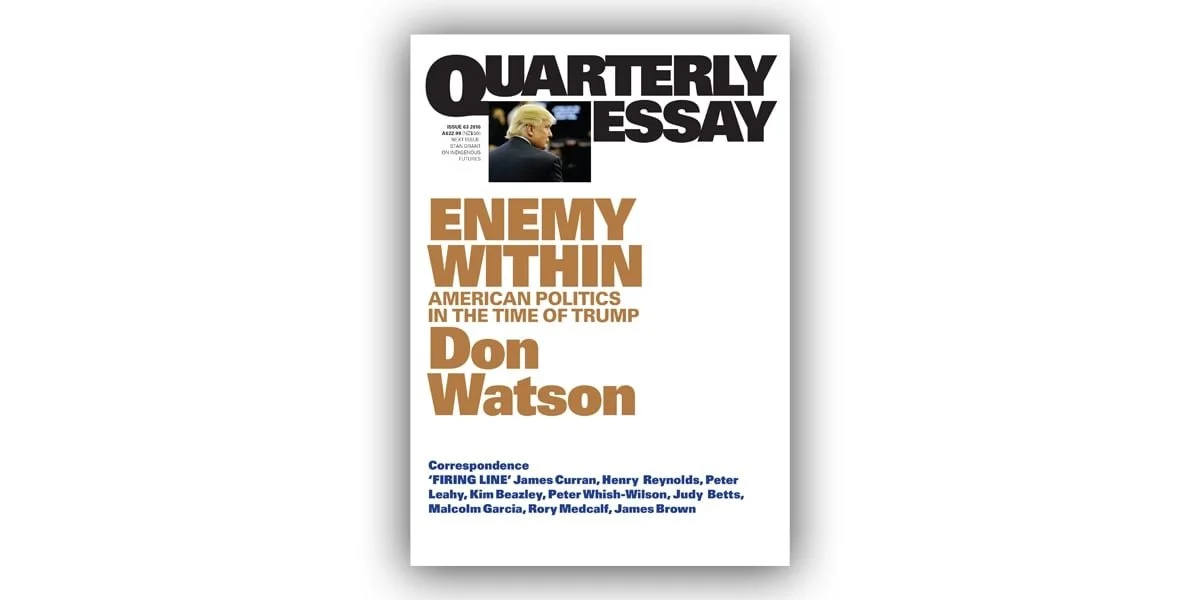
Don Watson: The Enemy Within by Garth Jones

AS the United States prepares to head to one of the most divisive Presidential polls in history, author and speechwriter Don Watson returns with his second Quarterly Essay.

Watson, a former speechwriter for Paul Keating, adopts a travelogue structure, similar to his 2008 book American Journeys. Travelling through the US interior, the author seeks to take the temperature of the state of the American body politic.

Reflecting on the toxic discourse of the 2016 election campaign, Watson discusses the roots of the United States’ historically unprecedented cultural and political division.

Enemy Within considers the three philosophical directions suggested by establishment candidate Hillary Clinton, social progressive Bernie Sanders and rogue Republican demagogue Donald Trump. Watson frames his musings around the concept of American Exceptionalism and the key role faith (in many guises) plays in presidential politics.

A lifetime political animal, the author attempts to parse the mythology and narratives of American public affairs which eventually spawned Donald Trump. The businessman, initially dismissed as a clownish sideshow, has, as of this writing, preyed on the electorate’s worst instincts and now seems within shouting distance of the White House.

Shrewdly exploiting a national sense of an Empire in decline, Trump’s populist ‘Make America Great Again’ narrative has thrived on fear mongering, xenophobia and paranoia.

Written before the Democratic and Republican National Conventions, where presidential nominees are anointed, Enemy Within is perhaps handicapped by the Quarterly Essay’s publishing schedule. Taking into consideration increasingly fraught opinion polling as election day draws nearer, it would be interesting to see a companion piece from Watson as the race tightens.

With November just around the corner, Watson’s essay serves as a fascinating insight into the historical and cultural forces behind the current parlous state of American presidential politics.

www.quarterlyessay.com

RRP: $22.99

Originally published here.

Faith in science by Garth Jones

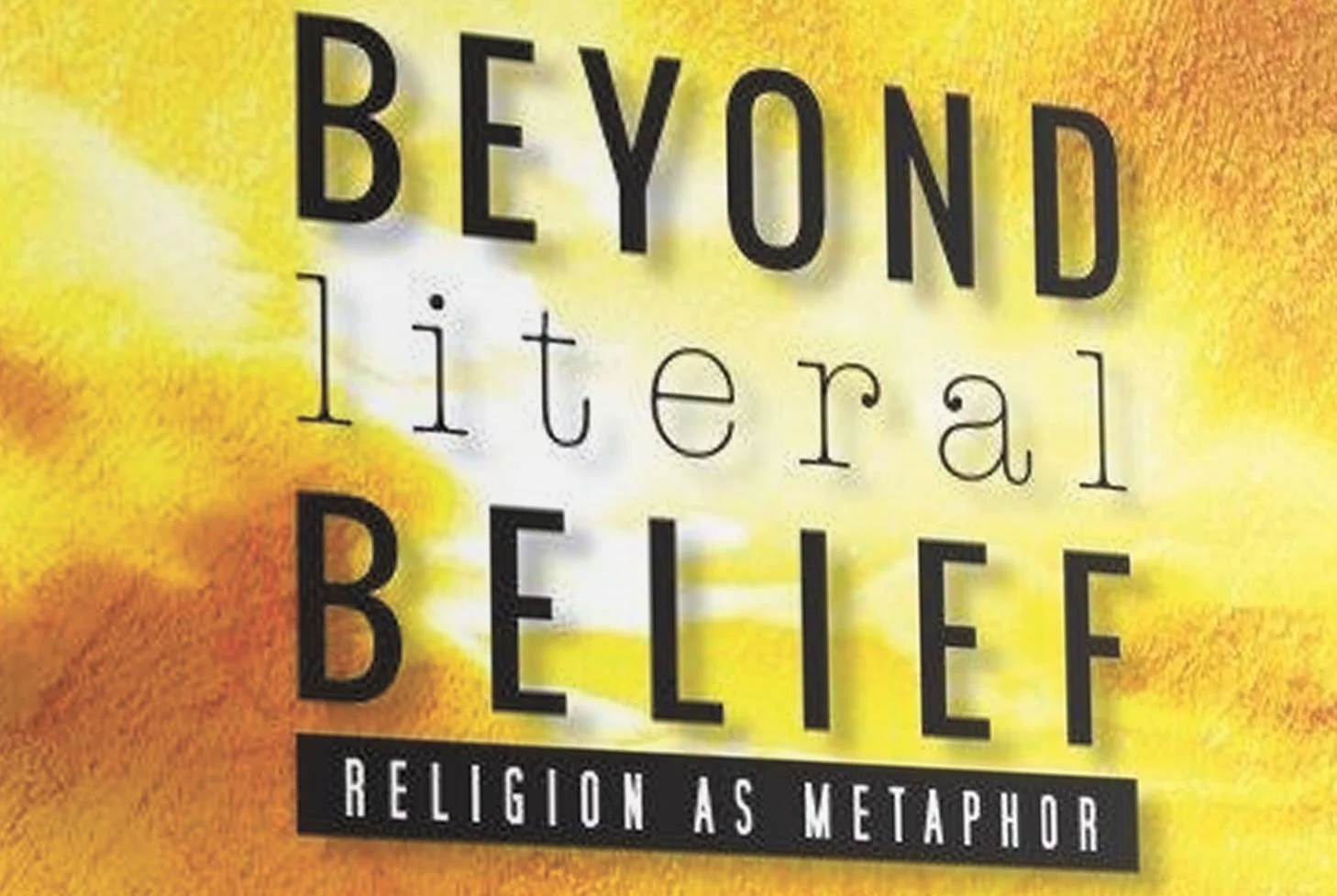
In last June’s Crosslight, I reviewed Prof David Tacey’s Beyond Literal Belief: Religion As Metaphor. Tacey’s book characterised the Bible as ‘a tapestry of stories designed to challenge and enhance life’s meaning’. Tacey acknowledged the work of ‘fundamentalist atheists’ like Richard Dawkins and Christopher Hitchens as misapprehending the symbolic nature of faith in favour of literalism.

The latest in cultural historian Catherine M. Wallace’s Confronting Fundamentalism series, Confronting Religious Denial of Science explores similar notions of metaphor and symbolism in an attempt to reconcile the opposition between science and religion, which dates back to the Enlightenment.
As informed by the work of natural philosopher Isaac Newton, the Enlightenment framed God as the Engineer Almighty, orchestrating all earthly events. Wallace suggests that, when Frederich Neitzsche famously declared “God is dead”, he was actually referring to the death of moral absolutes as evolving scientific thinking rendered the Engineer Almighty concept redundant.

Citing anthropologist Clifford Geertz’s concept of religion as ‘an evolved disposition to create symbolic structures that motivate pro-social behaviours’, Wallace examines the ways in which this approach can help rationalise the contradictions between science and belief.

Championing an evolving, dynamic approach to scriptural engagement, Wallace suggests a humanist paradigm in which Christianity is eternally evolving “source code”, with the notion of “God as love” at its core. This approach allows science and religion to cohabit, while also trusting that logic would finally consign the regressive contradictory dogma of fundamentalist and far right biblical literalist thinking to the past.
This book is a slim tome, a series of vignettes designed to encourage further investigation and scholarship.

Steeped in approachable language, Wallace includes personal anecdotes to illustrate her thesis. The author has a frustrating tendency, however, to reference as-yet unpublished volumes, giving the impression of an incomplete work.

Passionately advocating for an embrace of humanism as Christianity’s primary ethos, Confronting Religious Denial of Science is a thought-provoking work which will increase in value as subsequent volumes are released.

Available at: morningstarpublishing.net.au. RRP:$21.95

Originally published here.

James Brown: Firing Line by Garth Jones

Si vis pacem, para bellum.’ (‘If you want peace, prepare for war’).

As a pacifist, I came to former Australian Army Officer James Brown’s Quarterly Essay with some measure of apprehension.

Brown, a veteran of the second Iraq War and Afghanistan, applies his rigorous knowledge of defence and military issues in this examination of Australia’s role in 21st century conflicts.

Firing Line, Australia’s Path To War advocates for a thoughtful approach to matters of national defence, and is an excellent primer on our country’s geopolitical responsibilities as a so-called ‘middle power’. The essay gives consideration to our national interest, framed against the backdrop of shifting global alliances, terrorism and the continued evolution of the technologies of war.

Sensitive to the horrors and trauma of war, Brown writes with admirable pragmatism on the realities of Australia’s place in the global hegemony in stark terms.

Firing Line also makes a clearheaded case for our staggering focus on defence spending. Even this skeptical reader finished the essay understanding, if not precisely convinced, of our government’s policies.

Brown also gives extensive consideration to the unprecedented powers of the Australian Prime Minister in matters of war, and wonders at the wisdom of this approach.

In the lead up to the 2016 Federal Election, whispers began of former Prime Minister Tony Abbott returning to the Turnbull Government’s ministry in the Defence portfolio.

Brown’s Quarterly Essay is an eloquent repudiation of the Member for Warringah’s qualifications and temperament, with quotes from Abbott’s March Quadrant essay, ‘I Was Right On National Security’ giving the reader particular cause for concern:

“Placing substantial numbers of Australian troops within twenty-five miles of a hostile Russian army was a scenario that no one had ever before contemplated,” Brown writes.

Brown’s tempered prose throws Abbott’s aggressive overreach into relief. Considered and never hawkish, Brown examines the realpolitik and outlines a pragmatic approach to policy and preparedness for future conflicts.

Firing Line, Australia’s Path To War is an illuminating, perceptive examination of Australia’s shifting strategic role in the new millennium, a measured education for hawk and dove alike.

Originally published here.

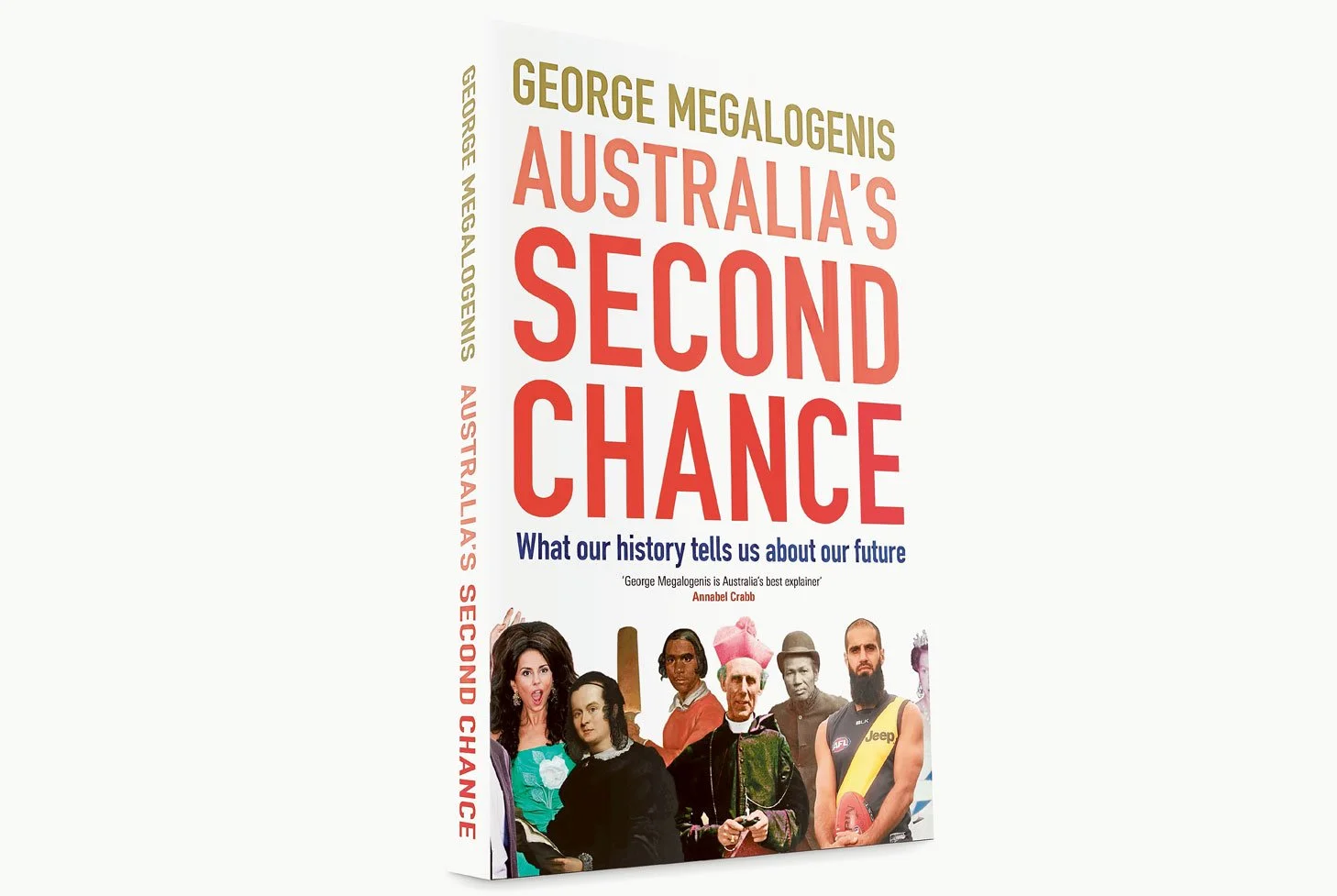
George Megalogenis: Australia’s Second Chance by Garth Jones

Australia’s Second Chance is former Canberra press gallery journalist and newspaper columnist George Megalogenis’ second excursion into the rough tapestry of our national identity.

Megalogenis’ first book, The Australian Moment, explored the unique political, social and economic circumstances that led to the nation surviving the Global Financial Crisis.

Continuing that line of investigation, Australia’s Second Chance delves into our migrant past, present and future, examining the advantages our history and wealth (environmental/ fiscal) afford us.

The Australian Moment was framed from Megalogenis’ perspective as a first generation Australian, and thus concerned primarily with events from the Whitlam era onwards.

This new work widens the author’s focus, examining the first encounters between Aboriginal Australia and the First Fleet through to the contemporary national conversation.

Megalogenis is concerned with charting the peaks and troughs of our growth and confidence, highlighting the rich contributions of multicultural Australia.

Contrasting our inherent egalitarian nature with our sometimes quixotic, isolationist tendencies, Megalogenis illustrates that our finest moments are characterised by our capacity to share.

Approachable, engaging and illuminating, Australia’s Second Chance combines history, dry economic data and political acumen informed by Megalogenis’ decade at the Canberra coal-face. In a sometimes grim zeitgeist, Australia’s Second Chance offers a hopeful blueprint for a brighter future by shining a light on our adventurous, creative and somehow more inclusive past.

Originally published here.

Ghost: Meliora (2015) by Garth Jones

"Thy pomp is brought down to the grave, [and] the noise of thy viols: the worm is spread under thee, and the worms cover thee."  Isaiah 14:11–12 *

Late last year, I reviewed Taylor Swift’s tacky mall grimoire, the philosophically abhorrent ‘1989’.

Admittedly a gloriously produced effort, it nonetheless spruiked a manifesto of superficiality, narcissism and mental illness, young Tay Tay’s spiritually bankrupt offering represented a nadir of 21st century SWF nervous breakdown trauma porn.

(Sample lyric:

“Remind me how it used to be

Pictures in frames of kisses on cheeks

And say you want me, yeah, yeah”
)

The wholesome, home schooled Swift is, of course, a generational bulwark, a plasticky distillation of all that’s sour and broken in contemporary western society, more concerned with Christian Louboutins than espousing any particularly (allegedly) Christ-like values.

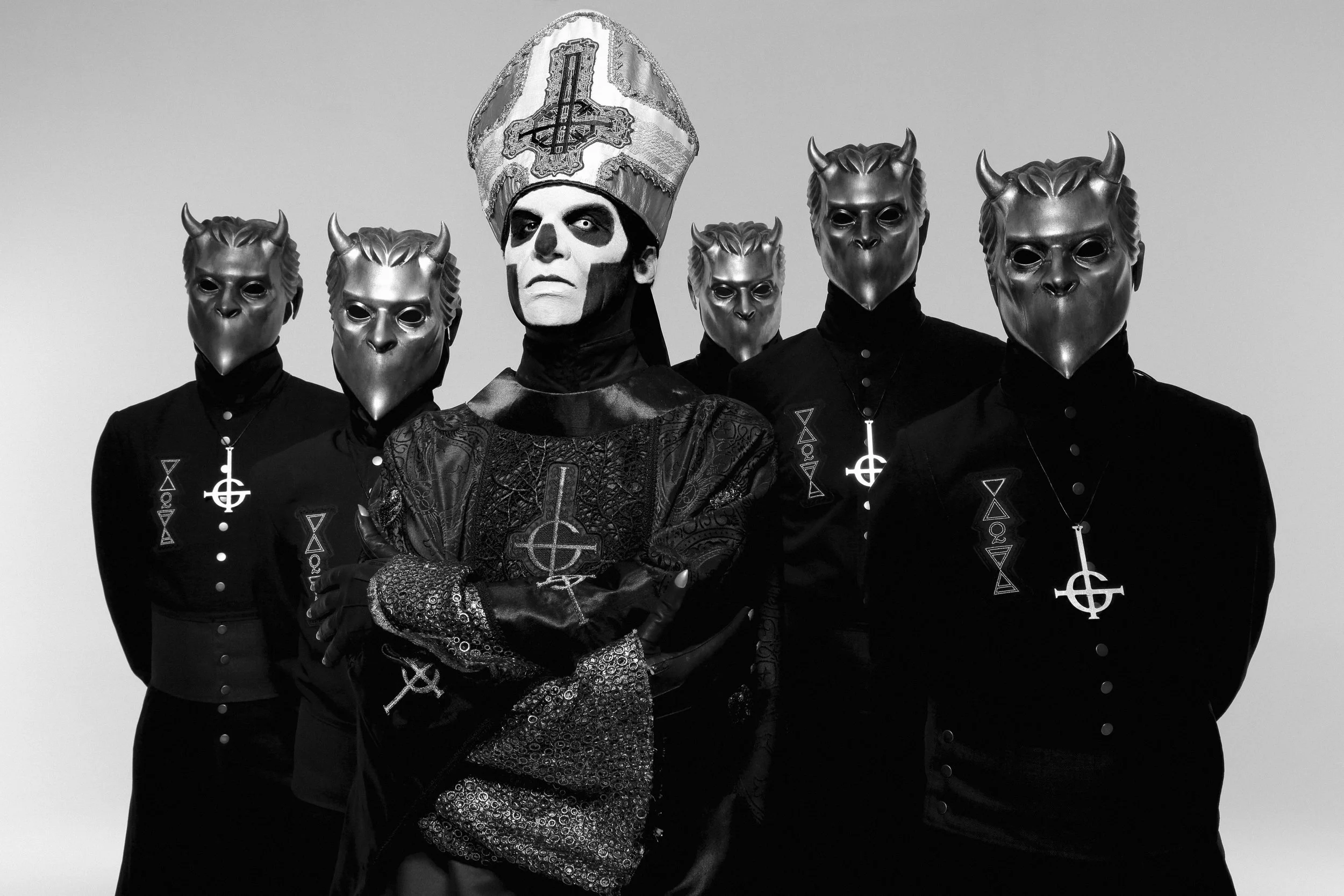
All of which is darkly ironic, considering this year’s premiere, immaculately produced, sweetly seductive suite of pop gems comes wrapped in the diabolical, unsettlingly empathetic metaphysical musings of Swedish Beelzebub-botherers Ghost.

If you’re one of the rapidly decreasing number of people who’ve yet to clock the arcane sextet, Ghost are...

Well- just look at ‘em.

Revelling in the carnivalesque theatricality of your Alice Coopers and (whisper it) KISS, Ghost embrace a lurid Hammer horror take on saccharine sweet, occult rock riffing with a spoonful of arsenic, an infernal ABBA convening the Black Mass with King Diamond.

Led by the enigmatic dark pope Papa Emeritus III (really just Papas Emerituses I and II with a new coat of corpse slap), Ghost’s five eternally masked Nameless Ghouls deliver a canny brew of meaty chops, spectral meditation and bombastic anthemic songcraft.

Meliora (“better” in the ol’ Latin; it'd be remiss of me not to Wiki it for you  like everyone else banging out a review), then, is our third descent into the underworld with Ghost, this ten track collection representing a considered compromise between the Pentagram-referencing garage metal of their debut, Opus Eponymous, and the ambitious, bonkers prog of sophomore effort Infestissumam, derided (unfairly) in some spheres for its melodic, riff-eschewing majesty.

Here, then,  we have Ghost’s most assured set to date, a delirious, cheekily blasphemous riposte to happy clappy kitchen fridge tosh like: 

“God, grant me the serenity to accept the things I cannot change,

The courage to change the things I can,

And the wisdom to know the difference.”

I’ll take

“Even now when you're here you are moving

Hysterically seeking out what needs improving

And you're still asking for the sun

All those things that you desire

You will find there in the fire”

any day of the week. 

Watch out, me mum, come Christmas time.

Gleefully upending their original penchant for penning hymns dedicated to the virtues of Old Nick, here Ghost wave a skeletal middle finger at the trite motivational homilies of your Tay Tays and such, instead framing this loose concept album around the absence of god and icky concepts like individualism, mischief, rejecting the material and opting for self-reliance and pragmatism.

Heavy stuff, eh?

No chance.

Tongues planted firmly in decaying cheeks, in some senses Ghost fill the void left by the sad passing of sardonic pop-metal genius Peter Steele (Type O Negative), winking at the infernal while filling your auditory canals with uplifting, majestically arranged symphonies, equal parts Lennon/ McCartney and Hetfield/ Ulrich.

Meliora’s eight psalms (there’re two instrumental interludes in there, one bucolic, one portentous) clock in at an efficient, leave ‘em begging for more forty-odd minutes, never wasting a hook and compelling the listener into back to back spins as its sophistication and raw, inspired musicianship reveal themselves.

Papa III’s seductive, malevolent lounge croon is all hemlock lullaby, mesmerising his congregation as the band dispense with eerie riffery and sinuous melodic chops, a mighty filthy rhythm section summoning Ragnarök up the back. Barnstorming thrash riffs intertwine with camp stabs of synth, guttural whispers, flirtations with Wings-style strings, early Priest meets Allmans dual guitar attack and towering, get-to-fuck dalliances with the Hammond-powered glories of Stormbringer era Deep Purple.

Meliora is produced by former Teddybear Klas Åhlund, whose resume includes a murderer’s row of shiny Scandy bubblegum credits, not to mention Katy Perry and ‘our’ Kyles, further reinforcing Ghost’s tricky proposition as a cheeky, convention defying set of accessible throwbacks, sort of along the lines of ‘Boston Go To Hell’.

(Oh, and it’s mixed by Andy Wallace, who, you know, has a pretty tight pedigree, too.) 

One cannot stress enough the need to secure Meliora on vinyl (buy a turntable, if need be, alright)- not only is the thick, Type O Åhlund/ Wallace production better served by the analogue format, begging for dirty headphones sessions, but you’ll also be treated to returning cover artist Zbigniew M. Bielak’s divine artwork at 12x12 LP scale, including a stunning booklet of illustrations depicting each track’s lyrical themes.

It’s well sexy.

Swerving expertly from sickly ear-worm canticles to rock operatic flourishes via woozy soundtrack to romantic, pastoral AOR sunshine, Meliora’s serpentine musical trajectory bears testament to Ghost’s continually evolving, provocatively accessible agenda- they just want to rule the world, alright?

This is monolithic stuff: ambitious, assured and addictive- that makes it three for three (plus a solid covers EP), and ample, fiendish proof positive that the Devil gets the best tunes.

And has way more fun.

(Tay Tay’s still much, much scarier, but.)

“Let the Priests of the Raven of dawn, no longer in deadly black, with hoarse note curse the sons of joy. Nor his accepted brethren, whom, tyrant, he calls free: lay the bound or build the roof. Nor pale religious letchery call that virginity, that wishes but acts not!

For every thing that lives is Holy.”A Song of Liberty, William Blake (c1792) **

Available now (reiterating: get the vinyl): ghost-official.com

* Yep, I’ve levelled up to portentous Bible quotes. 

** There, have some Blake as well.

The Dead Weather - Dodge and Burn by Garth Jones

So, then, to the third full release from alt-rawk supergroup The Dead Weather.

Five years since sophomore effort Sea of Cowards comes Dodge and Burn (welcome, Photoshop fiends!), the third in what could be characterised as a trilogy of thematically and musically complementary offerings.

Comprised of members of Queens of the Stone Age, The Kills and The Raconteurs, with, of course, garage rock totem Jack White filling out the ranks, Dodge and Burn lurches through a dozen tracks of signature libidinous, yelping scuzz-rock and anxious redneck blues.

Sharing lead vocals are White, all scalded cat yowl, and the Goddess her-very-self, Allison Mosshart (The Kills), whose nervy sing-song howl brings staccato, nursery rhyme lyrics, all toey angst and murderous intent to urgent, unhinged life.

Meanwhile, the autocratic White shares guitar duties with erstwhile QOTSA axe-slinger Dean Fertita, trading off crotchy jitterbug electrical salvos, and, thanks to The Dead Weather being primarily a studio project these days, serves up urgent, histrionic work on the skins.

Rounding out the lineup is Raconteurs (another White project) and Greenhornes multi-instrumentalist Jack Lawrence, here serving up swollen, fuzzed out bass accompaniment to Mosshart and White’s touch powder nervous breakdown anthems.

Released on Third Man Records, Mr White’s sonic fingerprints are, of course, all over Dodge and Burn- it’s a sticky, schizoid production wrought sweaty flesh with valves and dials and all things buzzing and analogue.

Hewing closely to the primitive, spare, sex (knife-play preferred) and death template set by Sea of Cowards and 2009’s Horehound, Dodge and Burn, whilst definitely a case of more of the same from these accomplished rapscallions, remains a worthy entry into their canon.

Filthy, unhinged and gagging for it, Dodge and Burn is the aural equivalent of a one night stand- you’ll feel cheap in the morning, but the tawdry immediacy of the experience is exhilarating nonetheless.

Faith No More - Sol Invictus by Garth Jones

With the typical sly hubris of a band whose swansong bore the legend 'Album of the Year', Faith No More resume their twitchy narrative nearly two decades later with ‘Sol Invictus',

Yes, that's 'Unconquered Sun' to you cheap seaters.

I’ll give you a moment to Wiki it.

Back? Cool.

Them lads’re still pretty cheeky, right?

Our revered alt-metal princes, who fragmented in ‘98 in the very thick of their bastard nu- metal offsprings’ heyday, trod a long, tentative path to new material after first reuniting in 2009 for huge, globally successful festival shows.

Where’d they get to in those ensuing years?

Founding member Billy Gould, stalwart from back when the band bore the dubious monicker ‘Faith No Man’, mixed his time between low-end duties extreme metal outfit Brujeria and (The Dead Kennedys’) maverick Jello Biafra’s ‘Guantanamo School of Medicine’ project, not to mention projects with members of Korn and Bad Religion (for his main gig’s aforementioned sins).

 Meanwhile, erstwhile Imperial Teen guitarist (and lyricist of FNM concert staple ‘Be Aggressive’), spent the post breakup years soundtracking indie films, and composed monster romance “Sasquatch: The Opera”, which opened recently.

Skinsman Mike Bordin, metallic rhythmic spine, served as timekeeper for Ozzy Osbourne’s band, including the much reviled re-recordings of solo classics ‘Diary of a Madman’ and ‘Blizzard of Oz’, and also pulled rhythm duties for former and future Alice In Chains guitarist Jerry Cantrell (oh, and, again, Korn; that flat circle).

Former Gould roommate, Jon Hudson, who replaced Mr Bungle’s Trey Spruance on ‘Album of the Year’ and returns to the fold here, appears to have been in suspended animation, given the dearth of interim biographical information.

Then, of course, there’s dark jester-prince Mike Patton, that  seminal, bug eyed dervish of an emcee, whose demented fingerprints are all over ‘Sol Invictus’.

(Drafted in 1988 and forever synonymous with the outfit, Patton is a man who, notoriously, packed his own excreta into hotel hair dryers for on-tour giggles.)

With an exhaustive catalogue of pre/ during/ post Faith No More side projects careening across the entire spectrum of musical lunacy, be it Italian telly theme covers, brazen hip hop, horn-dog lounge croon, sludge metal horror soundtracks and onwards into the velvety sonic  abyss, the palette with which Patton and his cohorts daub is expansive, lush and reliably sinister.

The tar that binds this majestic coiled lunacy, a raving, infernal genius prince, hell’s own lounge lizard, Patton slides seamlessly between soaring operatic flourishes, fuck-daddy croon and spittle flecked, guttural barks with aplomb, his renowned pipes rich vehicles for sustained menace, juvenile asides and nihilistic ruminations on those old favourites, sexandeath.

Clocking in at a feral forty minutes, ‘Sol Invictus’ is the statelier offspring of the mad cabaret of 1993’s seminal opus ‘Angel Dust’, a frenetic, splenetic slab of surging hardcore nervous breakdowns, hair pin swings into signature baroque operatic interludes.

Characterised by Gould (who also assumes production duties) as worshiping at the three altars of The Cramps, Link Wray and Siouxsie and the Banshees, these ten tracks are a brooding collection of creaking horror flick atmospherics, sultry flamenco, spaghetti western swagger, trademark menacing lullaby sing-song, swingin’ bossa nova and anxiety attack prone vocal dummy spit meltdowns.

That’s not to say there’s short shrift given to over aspects of the band’s diverse portfolio- ‘Sol’ occasionally bristles with the mad flamenco and surf inspired tangents of ‘King For A Day...’ and kookier career B-Side selections, whilst the sparse new wave desert snare of ‘Album of the Year’ (which was co-produced by Gould) is omnipresent.

Worry not, fans of a ‘certain vintage’: the spiky thrash flourishes and elastic funk exercises of the first three discs are all in rude evidence.

Lyrically, the band is as warily opaque as ever, though single ‘Motherfucker’ pointedly kicks off on the state of the music industry with savage majesty, a moment of towering martial thunder bombastically heralding the album’s home stretch.

Embracing the gobby, switchblade humour and psychopath energy of their catalogue (something their unwanted  nu-metal offspring lacked the wit and nuance to embrace), ‘Sol Invictus’ is a confident, concise collection. 

Even in middle age, Faith No More retain the ability to be confounding, obstinate, snotty upstarts, sneering gutter punks who (still) don’t give a fuck what you think-  the lads may not have delivered  the Faith No More album you think you want, but it’s definitely the one you deserve.

Thinking Metaphorically by Garth Jones

In Beyond Literal Belief, Professor David Tacey presents a passionate treatise, brimming with reverence and ambition, on rescuing the perception of religious faith from literalism and the idolatry and fundamentalism he suggests it potentially begets.

Presenting a series of allegorical readings of well-known Biblical parables, Tacey delves into the work of renowned philosophers and applies their insights to a poetic reading of the scriptures.

Citing the work of Carl Jung, Joseph Campbell and St Thomas of Aquinas (amongst many others), Beyond Literal Belief unpacks and explores a mythical approach to understanding the Bible, as opposed to the trend to approach it as a historical document devoid of the literary techniques of allusion and metaphor.

This approach is, of course, challenging and perhaps even controversial to many readers. The author’s brazen, contentious language can occasionally border on unforgiving. But, as he notes, the basis for his thesis is rooted in philosophical thinking which has been prevalent for the last several centuries.

Tacey reflects on the compelling spiritual truths locked within biblical text. His ultimate objective is to provide a contemporary framework upon which to build on biblical engagement and the exploration of spirituality, a movement gaining renewed relevance in the 21st century (consider also Daniel Dennett’s recent Caught in the Pulpit: Leaving Faith Behind).

Unlocking elemental concepts – including the Resurrection, the Apocalypse, the Virgin Birth and the Kingdom of God itself – Beyond Literal Belief investigates the core literary devices employed by the Bible’s authors to unlock the latent spiritual knowledge detailed therein, canvassing a gamut of beliefs and the lessons they impart.

While bemoaning the abandonment of religious principles, Tacey acknowledges the attraction of secular attitudes and new age thinking. The author proposes a renewed investigation of the parables, a religiosity which is, as he puts it, ‘not delusional but metaphorical’, acknowledging the essential role of mythology in regulating the spiritual life of the community.

As the writer appreciates, ‘the Bible is a tapestry of stories designed to challenge and enhance life’s meaning’. He feels it is a catalogue of transcendent realities, collected wisdom and universal truths perhaps best characterised as a handbook for the enrichment of the soul itself.

He also acknowledges the views of Hitchens and Dawkins, whose case for extreme atheism rests on the fact the texts are not literally true, which the author asserts is to miss the point of faith entirely.

Tacey’s work proposes to liberate and reimagine millennia of dogmatic, entrenched religious thought in a spirited attempt to revivify the spiritually nourishing essence at its root. He embraces a broad array of thinkers, philosophers and theologians in an effort to re-frame the modern attitude to faith.

Beyond Literal Belief: Religion As Metaphor can be a thorny, confronting proposition. But is one with which it is well worth persevering, offering, as it does, an intriguing investigation of alternative principles upon which to frame one’s faith.

Originally published here.