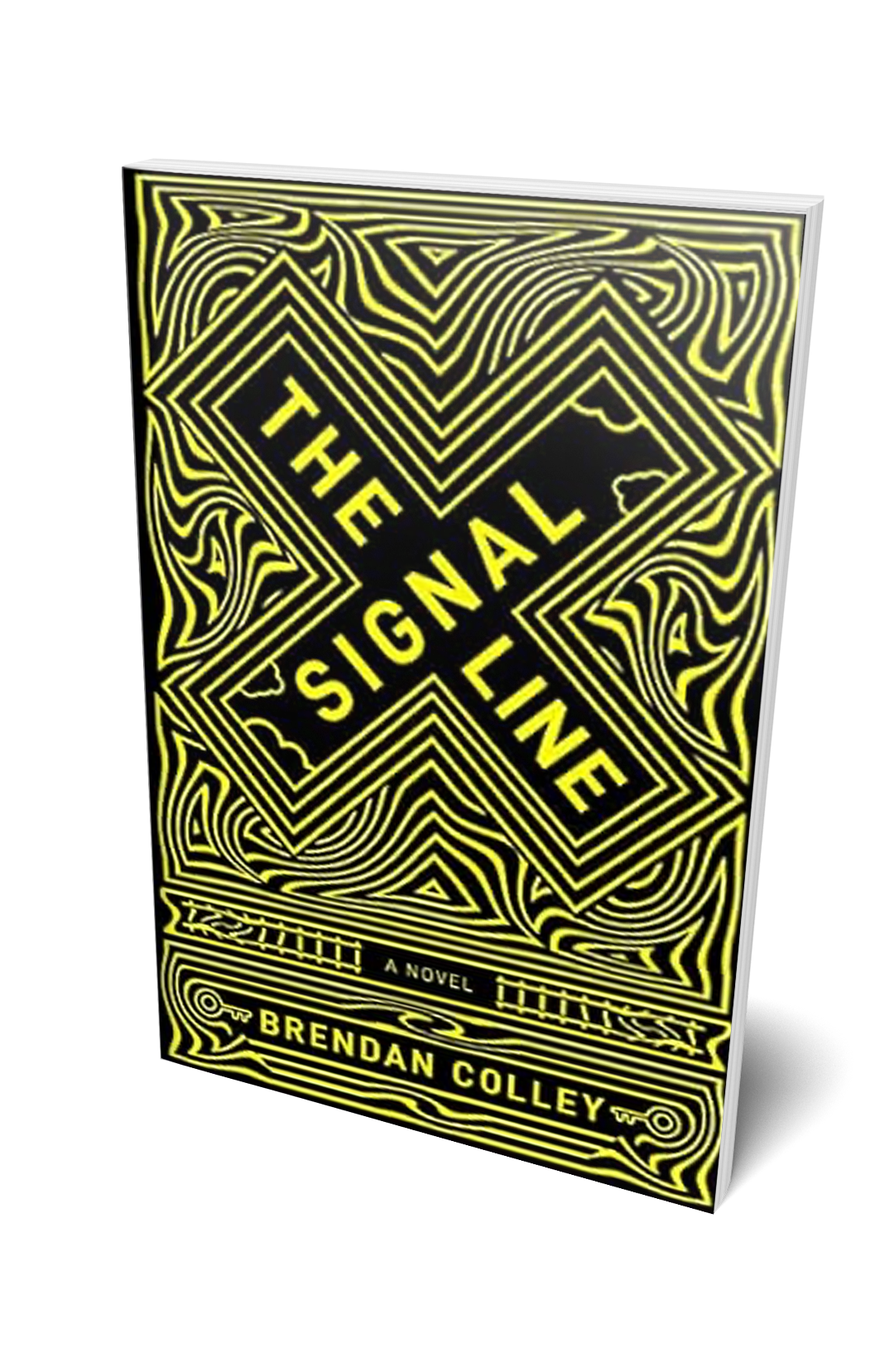
In preparation for discussing Brendan Colley’s ‘The Season for Flying Saucers’ (Transit Lounge) on THE STACK, I reached out to the author for a chat about influences, the creative process, the path to publication, missing out on Twin Peaks and the X-File the first time around and, as is probably mandatory, UFOs.
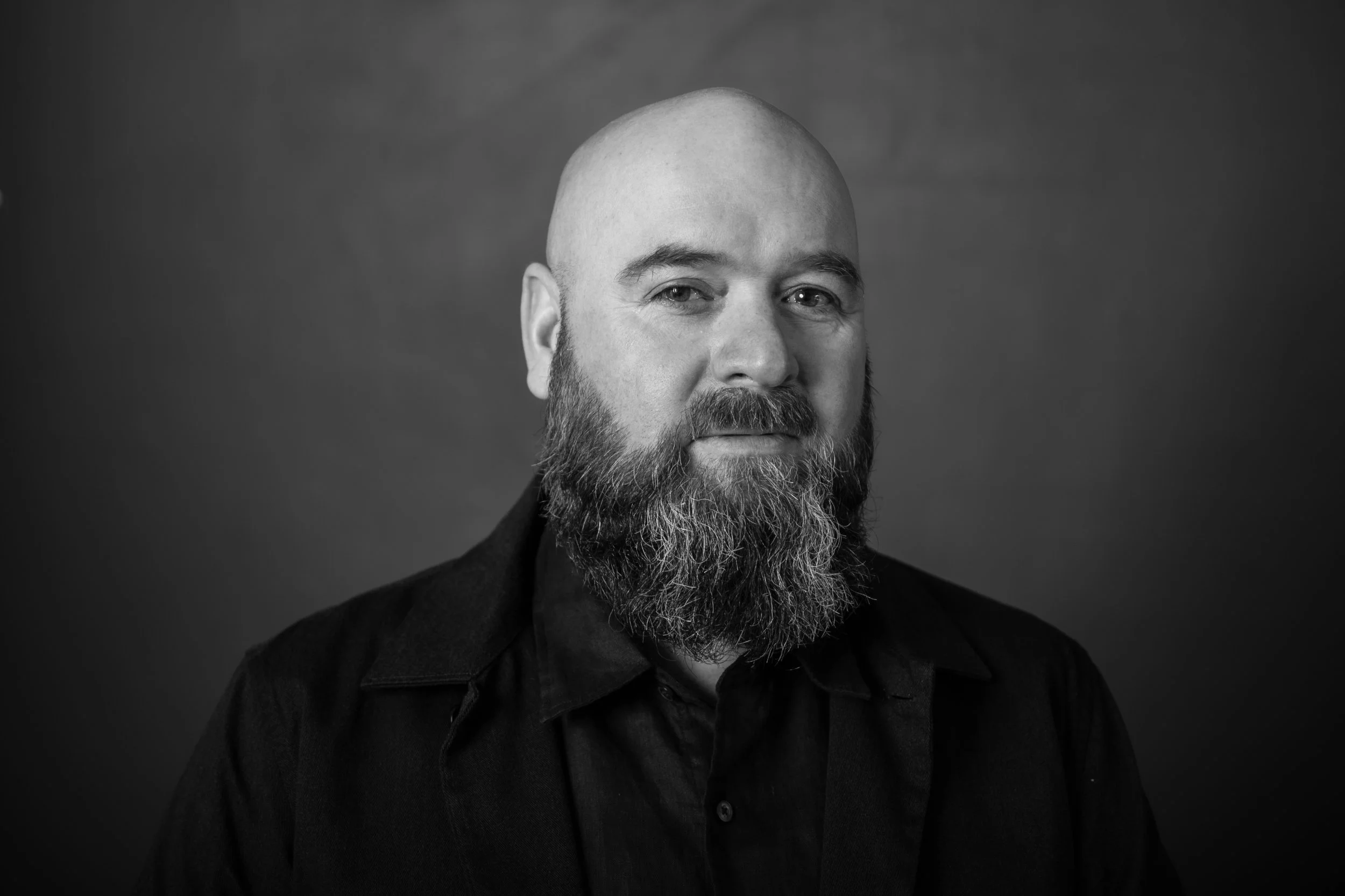
‘The Season for Flying Saucers’ author Brendan Colley,
’The Season for Flying Saucers’ has, pardon the expression, a deeply Tasmanian vibe. Are its characters indicative of, just maybe, your own neighbourhood? Your bio says you moved to Tassie from South Africa in 2009. I can only imagine the cultural whiplash. How has the contrast between the two lived experiences informed your work?
The journey from South Africa to Tasmania wasn’t a direct route. After University I lived abroad for 11 years, splitting that time between London and Japan. I met my Australian wife (Victorian) in Osaka, where we were both teaching English. After shaking off our wanderlust, we spent 2 years in Melbourne before hopping across the Bass Strait to Tasmania.
In terms of how this has informed my writing?
For many years I set my stories in fictional places. I didn’t feel sufficiently connected to wherever I happened to be, to root my characters there. In truth, it was a lack of confidence. As a result, the settings for my work ended up being a weird mix of small American town with European sensibilities. Basically, the films that inspired me, and what I was experiencing in my travels. No wonder the feedback for my formative work was that the characters didn’t come across as being real humans. There was no sense of belonging!
It was only after I began writing The Signal Line, my first published book, that I found the confidence to set something in the location I was living. I’d been in Tasmania for five years, with a feeling I’d happened upon a place I could finally call home. The book became a homage to the town I envisaged spending the rest of my life. This has continued through to The Season for Flying Saucers, and now I expect to set all my writing here. So yes – if it reads as a Tasmanian story, I wear it as a badge of honour.
The characters, on the other hand, are expressions, reflections and explorations of my own wounds and insecurities; and idiosyncrasies that are particular to me.
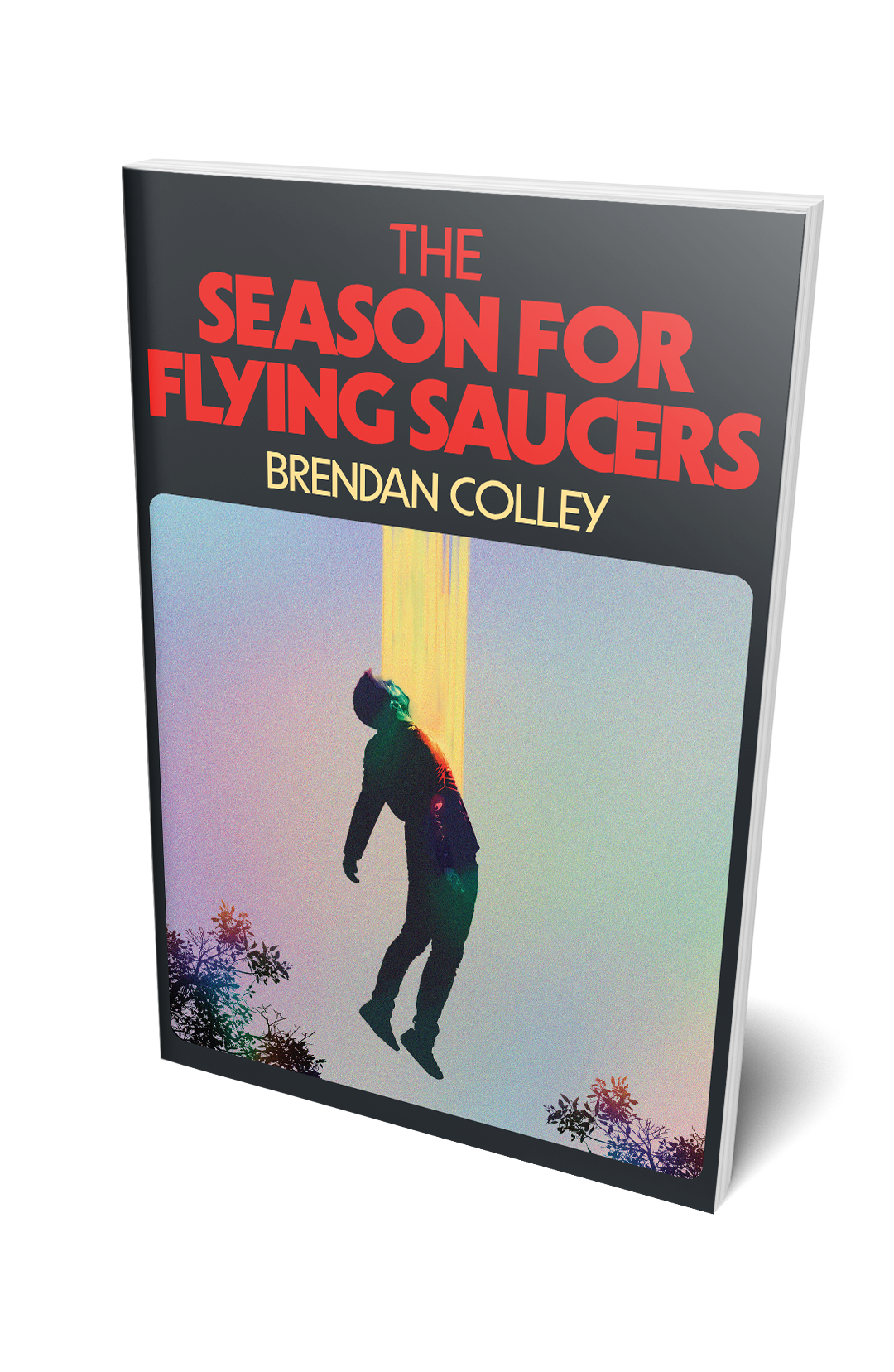
The cover of the book is giving me a huge ‘Fire In The Sky’ (1993) nostalgia rush. I’m guessing you’re a nineties kid too, with all the pop cultural baggage that entails. How did that influence the genesis of the project?
Oh wow, that’s a great image! I just looked up Fire in the Sky and saw the poster art. I wasn’t aware of this film.
I was born in 1971, so in my 20s through the nineties.
My writing is heavily influenced by popular culture, though not necessarily in its time. I was at university for the first part of the nineties, and then abroad. That is to say, I pretty much lived without a television through this period. It may blow your mind to know this – and it’s a little embarrassing to admit – but I only watched Twin Peaks for the first time a couple of years ago (I’ve since watched the first season twice); and the same for The X-Files (I binge watched the first 2 seasons the winter before last). It was pretty cool to watch these works while I was in the final stretch of drafting The Season for Flying Saucers (and much to the delight of my David Lynch and X-Files devotee editor, found reason to squeeze in a Twin Peaks reference during the editorial).
It may be of interest how I specifically arrived at the idea for the novel.
In 2014 I was playing around with some narrative poetry, like I usually do as a warm-up before I start my nightly writing sessions. Out of this routine I fetched down the following:
sales rep’s text to a colleague
hi k.
hope your quarter’s tracking solidly
currently bunked overnight in launceston
flying out to melbourne sunday
business so-so, usual traumas &
resuscitations
still no ufo sightings despite
the increased mileage
quota heavy but remain optimistic
the nights are what get me through
the skies sparkle with activity
for those who are watchful
one day they will come get me
b.
At the time I thought nothing of it. These poems are for myself – not publication – and over the course of the past 12 years I’ve written over 1000 such pieces. But it’s the stitching together of two or three seemingly unrelated ideas that provides the foundation for my stories, and little did I know the voice captured in these unremarkable lines would later mature into that of the protagonist for a novel about flying saucers!
It turned out to be the first in a series of what I came to call my ‘little green man poems’. Every so often they’d pop up and ask to be written, and over the next decade I collected around 80 in this style. I had no plans for them, but simply enjoyed that they humoured me.
Fast forward to the COVID year: during this period I became interested in exploring the idea of a family confined to a house. Perhaps due to an economic downturn? I spent an evening with it, penning down a few notes about an estranged family with two adult children forced to live under the same roof for a fixed period of time. These family members had no interest in resolving their differences; it was a purely practical arrangement. Once they’d sorted out their respective circumstances, they would continue on their separate ways. I filed it away, thinking it fodder for a play (I don’t write plays!), and something I’d likely never revisit.
Later that same year I came across an article about how summer is the season where UFO sightings are most commonly reported in Japan. From this article a title leapt out at me! The Season for Flying Saucers. I immediately knew I wanted to write a book with this headline. In that same sitting I connected the title with the two aforementioned ideas, resulting in the following premise:
Due to an economic downturn, an estranged family is forced to live together under the same roof for one summer. As if things aren’t strained enough, they become increasingly convinced they’ve been targeted for alien abduction.
The main protagonist would be the 29-year-old son. Unbeknownst to the rest of the family, in his despair and belief that he’s not meant to know happiness in this lifetime, he’s been writing alien abduction poems on an old typewriter, requesting any passing motherships to drop down a beam and whisk him away.
With a title, a premise, and the voice for a protagonist, I had the reasons needed to abandon my then work-in-progress and embark on a journey to discover this family and their story.
The published novel is the product of the roads travelled down (and skies traversed!) over the next three years.
Regarding the cover, Barry is great, and when the time comes for cover art he asks if there’s anything you’d like to throw into the design mix. This isn’t for specific ideas, but more inspirations related to the theme and essence etc. that would be worth knowing (Josh Durham from Design by Committee designed the cover for both my novels).
For The Season for Flying Saucers, my contribution was this: ‘1970s flying saucers poster’
I included a link to the image page on Google that results from searching this term.
(1970s because the inciting UFO incident in the novel is the one reported in Maydena, Tasmania in 1976. But if you replace 1970s with 1980s or 1990s, you effectively get the same style of image)
From there, Josh weaved his magic.
Interesting note: apparently it’s a design rule that you can’t include an image of anything stated in the title. In other words, The Season for Flying Saucers couldn’t have a flying saucer in the cover. Luckily for me Josh knows best, and I couldn’t have wished for a better image to reflect the book.
You inhabit an almost Lynchian space between the mundane and the surreal (sans the bloodshed). Are there any authors, Aussie or otherwise, who inspire you and similarly fit into that zone?
This took me a long time to figure out, and I don’t think it was inspired by other writers/books.
I’ve been writing routinely for 2-3 hours every day since my early 20s; and it was 26 years before I published anything (this being The Signal Line, with Transit Lounge in 2022). Before that, I’d spent 3.5 years on my first effort at a novel (never finished), and 6.5 years on my second effort (finished, but roundly rejected). The second half of the 90s and the 00s was devoted to other forms: 4 screenplays, 2 plays, a radio play, some short fiction, a libretto, 100+ song lyrics, a book-length collection short stories ... basically everything and anything, trying to find my voice.
With my first two novel attempts, the obstacle seemed to be that the surreal elements overshadowed the characters, to the extent they never felt ‘real’. They were props, caricatures, lacking in resonance. So concentrated was I on pushing the concept – my ideas always sounded ‘cool’ as a pitch – that my characters didn’t come across as Tarantino-esque cool, they seemed cartoonish. There was heart in there somewhere, but I didn’t know how to bring it out. My education may have benefitted had I actually watched Twin Peaks and The X-Files when it was running!
At the same time, my life had taken a path I hadn’t allowed into the creative process. When I wrote, I visited my imagination without facing my shadows.
Every artist has their ‘thing’ they keep coming back to. You can’t escape the wounds that inform your work – even subconsciously – if you’re writing honestly.
For me, it’s family & home.
I don’t set out to write stories about family ... but usually, as I venture deeper into a work, I look up and go, ‘Oh, it’s that again!’
I suppose my sort of nomadic existence – including my parents going through a prolonged trial separation and then divorce between the ages of 3-5 – is the thing that sits within me, and which wasn’t reflected in my work in those formative years. I’d lived in 14 different accommodations (houses/town houses/units etc) by the time I left South Africa. 7 places before I finished primary school, and 7 places through high school and university. So the family home is an elusive thing to me. Then I lived on the road for 11 years. Consequently, my work tends to be about people who are leaving home, returning home, trying to keep a home, trying to sell a home, trying to make a new place a home, trying to furnish a home, trying to clean up a home. This theme doesn’t excite me when I list it out like that, but the house, the neighbourhood street, tends to be the stage on which my characters wish to play out their lives. Chasing that sense of belonging: running from it, or trying to find their way back to it.
When I realised this (not an epiphany, just by attrition), my voice sort of crystallised, and that space you speak of between the mundane and surreal gave my characters the heartbeat I’d been searching for. Somehow, by leading with the mundane – that kitchen-sink drama – and positioning the anomalous at the periphery, sort of peeking-in, I could make it work, for the kind of stories I was trying to tell.
Perhaps if I’d studied creative writing I’d have learned this and saved myself a couple of decades. But truthfully, I needed to write my way to this understanding, and have those lived experiences, to recognise it.
As for books ... that’s tough, as there isn’t one writer who inspires my overall style or tone. But there are many who inspire different aspects.
Here are a few.
Willy Vlautin. I discovered him about six years ago, and ploughed through all his work over the course of 18 months. Talk about mundane! The way he’ll write a character pulling up in their driveway, getting out the car, walking to the door, fumbling with the key, opening the door, going into the kitchen, depositing a bag of groceries on the kitchen table, opening the fridge, taking out a can of beer, opening the beer, taking a swallow. I mean, that space which for most writers is an action beat to connect the main action, for him is the work, is the heartbeat. His writing affects me deeply. Every sentence simple, accessible, and without style ... and yet a voice that is all style. This is something I’ve thought about a lot, the simple way of telling and showing a story, where the style isn’t in the swing of the sentence, but in the voice. Willy Vlautin sits at the top of the mountain for this.
Patrick de Witt. For his humour, and wit. I wish for my writing to have a warmth, joy, sadness, disappointment, quirkiness. Patrick de Witt’s books are these things to me. His sentences are the kind I read more than once.
The surprising one – not an inspiration – but unexpected, for sure. A couple of years ago my wife gave me a book for Jolabokaflod (have you heard of this tradition?). The book: Beautiful Star, by Yukio Mishima.
She gifted me this novel because I was writing The Season for Flying Saucers. Oh my, when I read the opening pages! A family of four who each hail from another planet, here living on earth, in a house. Just the matter-of-fact way this was declared to the reader, a conventional family going about their business in an every day manner, one from Mars, one from Venus, one from Mercury, and one from Jupiter. It was this matter-of-factness, where the line of reality is moved a few degrees, so the other-worldly is part of reality, but not in a significant way, because normality still reigns, that moved me tremendously. I wish I’d discovered this book a decade ago (not for the crazy stuff Mishima goes on about), but for how he writes that space between the mundane and the surreal.
How did you end up with Transit Lounge?
Serendipity, luck, fate, the stars? Something or someone was looking out for me, so that my first two books found a home with Transit Lounge. And it wasn’t a straight-line journey.
I’d finished the manuscript for The Signal Line, and started querying in earnest. I did it in the right order: agents; then publishing houses. For the first time, I was getting bites.
Unlike the U.S, where the only avenue to publication is via representation (and you can spend 2 years querying 80 agents, which I’d experienced with my previous manuscript), the pool in Australia is small. Additionally, Australian agents don’t tend to represent debut authors. Still, if you’re going to try, it’s agents first, and then publishing houses.
I submitted to 6 agents in total. Four of those agents requested a partial (3 chapters/50 pages); of those four, two requested a full (whole manuscript); of those two, one read the whole manuscript. That agent was Martin Shaw. Ultimately, however, he passed on it. But he was awesome, providing personalised feedback and encouragement. I made the decision if I ever found a home for the manuscript, or when I finished the next one, I would go back to him.
So I proceeded to query publishing houses. Affirm Press first (no response), and Text. Text requested the full manuscript. They sat on it for 18 months. I was restrained, only nudging them every six months or so. They kept me on the hook, but as time passed I knew the odds were falling out of my favour. In the meantime, the manuscript won the Unpublished Manuscript prize in the Tasmanian Premier’s Literary Awards. This peaked Text’s interest once more, but finally they gave me a ‘No’.
Martin – still not my agent – was cheering for me from the sidelines. We’d developed a connection through Twitter, and had begun sharing war stories: my experience at Text, and his own experiences with his writers at Text. He was extremely helpful, giving me insights on how it worked, who was likely reading it, how they might arrive at their decision, timeframes etc. By this point I had lost heart, believing the novel would never find a home (I’d submitted to all the other publishing houses in the interim). I was deep into the next novel, eager to clear the energy of this manuscript that seemingly didn’t want to die. It was Martin who suggested I submit to Transit Lounge. I still remember his words: ‘You never know what Barry will like.’
In January 2021 I submitted to Transit. Their submission page said they were closed to queries. I submitted anyway. I’d been checking their website for six months, ever since Martin’s advice. But I’d reached the end of my tether, and shot it through. Barry responded the same day, saying he looked forward to reading it, and would get back to me within seven weeks. Five weeks later he offered me a contract. That same day, before I responded to Barry, I reached back to Martin to share the news, and asked if he would consider representing me. That is how I ended up at Transit Lounge, and also with Martin as my agent.
Later, Barry told me his submission page was always closed to queries (I don’t know if this still holds true).
Hack question. Have you ever had a UFO encounter? (And now that all the conspiracy theories are turning out to be true, how long until we see a televised interview with a grey?)
I haven’t had a UFO encounter. I don’t know if I wish to have one!
I can tell you my wife is relieved the novel is finished. My alien abduction poems made her uncomfortable. She was concerned they’d hear me, and one day respond to those requests (much like Noah’s ex-wife in the novel!). So we’re a bit like Noah and Sarah in that way, where the idea of it scares me, and I have a trepidation, but I can’t help writing those pleas; and she doesn’t believe in aliens, but would rather I didn’t address analogue poem letters to them, just in case.
You can buy the book from Transit Lounge directly here. You can find Brendan on Instagram here.